August 25, 2026
Nobody Recommends a Keyword
A lot of SEO people are calling this moment AEO, and then doing SEO.
Same tactics. Same mindset. New acronym on the invoice.
I think that’s a mistake, and I think it’s going to get expensive for the people making it.
The wrong question
The SEO era was built on one question: what does the algorithm want?
Answer that question well enough, at scale, for long enough, and you won. Keyword density. Backlink volume. Meta tags. Schema markup. Not because any of it made you a better business. Because it made you legible to a machine that couldn’t tell the difference between legible and good.
That machine is gone.
The thing recommending you now doesn’t parse. It reads. It holds your reviews, your reputation, your actual product, your competitor’s actual product, and a thousand other data points in its head at once, and it forms something close to a judgment. Ask it who to hire, what to buy, who to trust, and it doesn’t return ten blue links for you to sort through. It picks. Sometimes it picks one.
So the question stops being what does the algorithm want. It becomes the one your best salesperson has always had to answer:
Why would someone who knows the whole landscape recommend you specifically?
That’s not SEO 2.0. That’s the oldest question in business, asked by something finally smart enough to actually answer it.
Optimizing for a person
Here’s the shift, plainly: treat the AI like a person, because for these purposes, it’s acting like one.
A person doesn’t recommend you because you said “best project management software” fourteen times on your homepage. A person recommends you because of the sum of everything they know about you: what you actually do well, what people say about you when you’re not in the room, whether your last three customers were happy, whether your pricing page lied to them, whether you showed up when it mattered.
An AI answering “what’s the best project management software for a 12-person agency” is doing a rougher version of the same thing. It’s synthesizing your site, your reviews, your press, your Reddit threads, your competitors’ reviews, and whatever else it can reach, into something like a professional opinion.
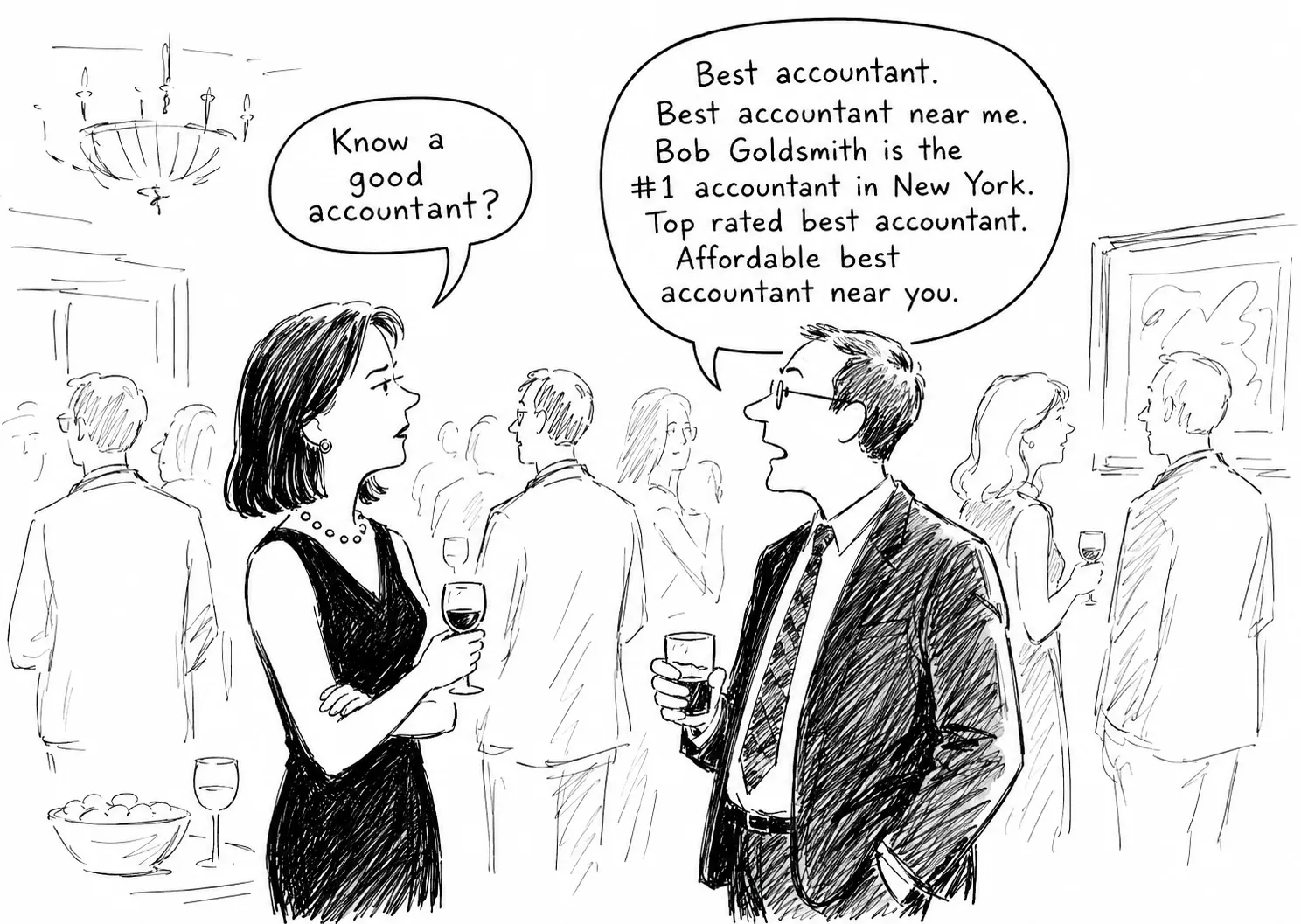
You cannot keyword-stuff a professional opinion. You cannot backlink your way into being liked. The lever isn’t content volume. The lever is the entity itself: the product, the reviews, the proof, the brand, the whole shape of the thing you’ve built. AEO isn’t a content strategy. It’s a referral strategy for an audience of one very well-read, very fast, weirdly literal-minded person.
Why the trick works right up until it doesn’t
Some of the loudest AEO advice right now is just SEO with the serial numbers filed off. Stuff your llms.txt. Get cited on ten low-quality directories. Structure your FAQ page to bait a specific answer box. Game the retrieval layer the way you used to game the crawl.
And it works. Today.
It works because AI is being asked to answer more questions than it has verified answers for, and it’s filling gaps with whatever signal it can find. Right now, that signal is gameable in the same lazy ways search used to be.
Some of this is even more brazen than old SEO tricks. There’s a whole cottage industry now around publishing an “AI fact sheet,” a page built purely to be scraped and cited, stuffed with the exact claims a company wants an AI to repeat about it. It’s not written for a customer. It’s written for a crawler wearing a slightly smarter hat. It’s keyword stuffing with a rebrand.
It won’t stay that way, for the same reason it didn’t stay that way in search. Every trick that works becomes a pattern. Every pattern that works gets adopted at scale. Every pattern adopted at scale gets identified and discounted, because the entire incentive of these systems is to get harder to fool, not easier. The people optimizing for the loophole are optimizing for a window that’s actively closing while they build inside it.
Meanwhile the businesses that are actually good, that actually have the reviews and the retention and the reputation, aren’t running a play with an expiration date. They’re just building the thing a smart, well-informed person would already recommend. That doesn’t decay. It compounds.
What this actually asks of you
If the AI is evaluating you the way a sharp, extremely well-researched person would, then the checklist isn’t a content checklist anymore. It’s closer to an audit of your whole business as an entity:
Would your own reviews recommend you? Not your homepage copy. The actual sentences real customers left on Google, on G2, on Reddit. That’s a primary source now, not a testimonials widget you get to curate.
Does your content answer the question, or perform answering the question? A page written to satisfy a crawler reads differently than a page written to actually help the person asking. The AI can tell. Increasingly, so can the human reading the AI’s summary of it.
Is there a consistent, verifiable story about you across the places an AI would look? Your site, your reviews, your press, your socials, your competitors’ comparisons of you. If those tell four different stories, you’re not four times more visible. You’re just confusing.
Would a genuinely knowledgeable person in your category recommend you, unprompted, if asked? That’s the whole test. Everything else is just evidence for that verdict.
None of this is a technical fix you ship in a sprint. It’s brand work. It’s product work. It’s the slow, unglamorous work of actually being the thing you want recommended, which is a much longer project than adding a meta tag, and a much better one.
The real takeaway
Here’s the part that should be a relief, not a burden: none of this is new.
David Ogilvy built Ogilvy & Mather on a single idea, that a brand is not a product, it’s the sum of everything a person believes about it. Not the ad. Not the slogan. The whole reputation. He called it the brand image, and it’s the reason Hathaway shirts and Rolls-Royce and Dove became what they became. That idea is from the 1950s. It’s not new. It’s just been buried under seventy years of channels, algorithms, and shortcuts that let you skip it.
SEO was one of those shortcuts. It let you win without the brand being real, because the thing judging you couldn’t tell the difference. That window is closing. AEO isn’t the next shortcut. It’s the bill coming due on the last one.
The AI recommending you today is doing, badly, what a well-informed person has always done: forming a judgment based on the whole picture. It will get better at that every year. Which means the fundamentals Ogilvy was working from in the 1950s aren’t a throwback. They’re the actual playbook for the 2030s, whether or not you call it AEO.
Build the thing worth recommending. Everything else is just stalling the inevitable.